
The Difference Between a Detective and a Myth

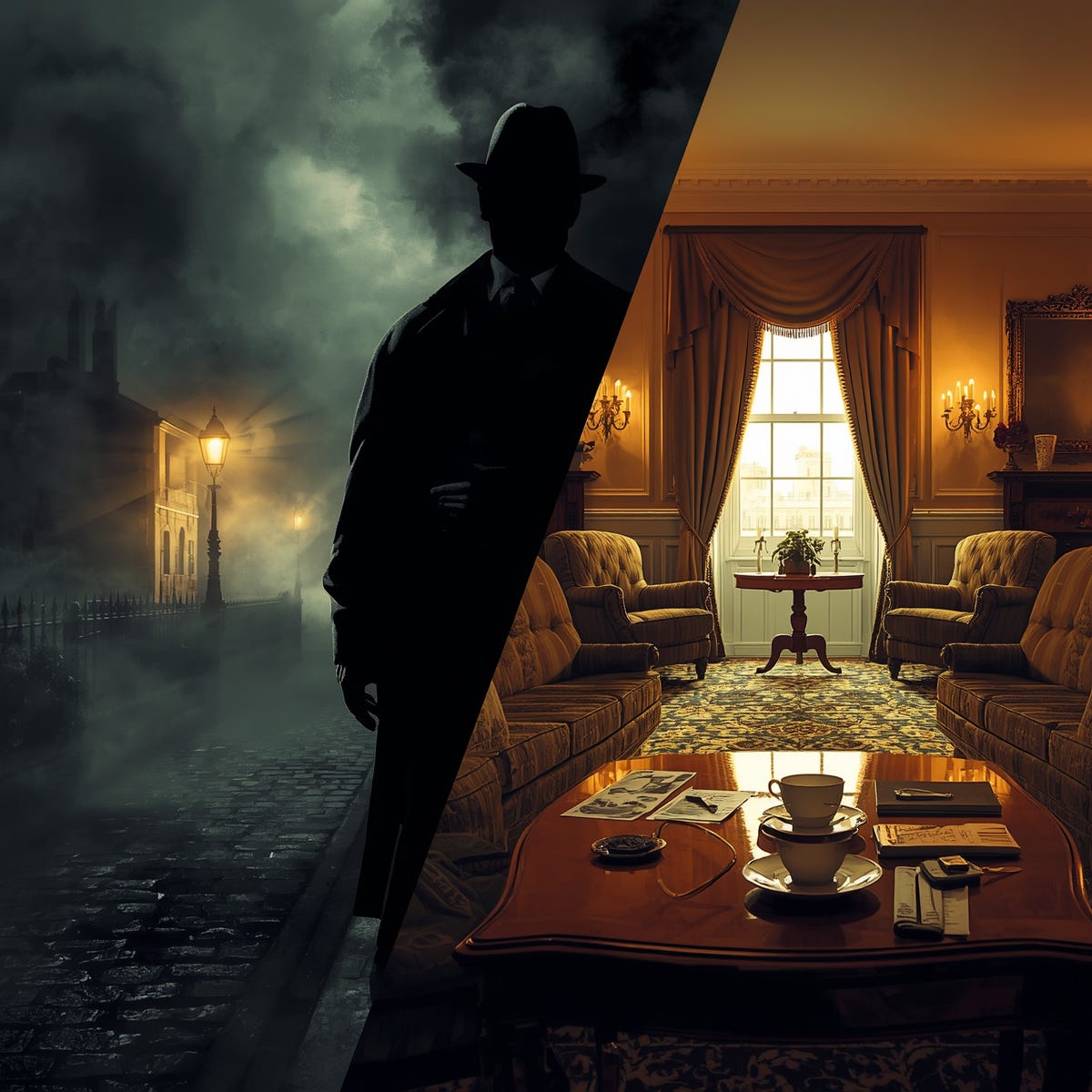
There have been many great detectives. The Golden Age of detective fiction gave us intricate puzzles, ingenious murders, and minds as sharp as any ever put to paper. Hercule Poirot with his order and precision. Miss Marple with her quiet, devastating insight. Each, in their way, masters of the game.
And yet, more than a century on, one figure still stands above the rest. Sherlock Holmes is not simply remembered. He is mythologised. This is the difference.
The detectives of the Golden Age are, at their core, perfect machines of logic. They exist within the structure of the puzzle: a crime, a set of clues, a solution. Their brilliance is undeniable, but it is contained. When the mystery ends, so too does their world. Holmes does not work that way.
Holmes feels as though he exists beyond the story. The cases are not the point, they are glimpses into a life already in motion. We do not meet him at the beginning, nor leave him at the end. Instead, we observe him, briefly, as Dr. Watson records what he can.
This framing changes everything. Because it turns Holmes from a character into a figure of legend. The Golden Age detectives solve problems. Holmes confronts chaos itself. He is not merely restoring order to a drawing room or a country estate, he is pushing back against something darker, something less easily defined. The world around him feels larger, more dangerous, and crucially, unfinished.
And then there is the man himself. Poirot is meticulous. Miss Marple is observant. But Holmes is extreme. His brilliance comes at a cost: isolation, obsession, a mind that cannot rest. He is as compelling as the mysteries he solves, perhaps more so.
We do not just read Holmes for the solution. We read him for Holmes. This is why he endures. Not because he was the first, nor even because he was the cleverest, but because he transcended the role of detective entirely. He became something rarer. A myth, still walking the fog-bound streets of Baker Street, still solving cases we have not yet heard, still, in some sense, alive.
And that is something no puzzle, however perfect, can quite contain.
Andrew Peel
Andrew Peel is the author of Footsteps on the Moor a thoughtful reimagining of Sherlock Holmes time on Dartmoor via a private journal discovered by his brother Mycroft.