
Why 221B still endures

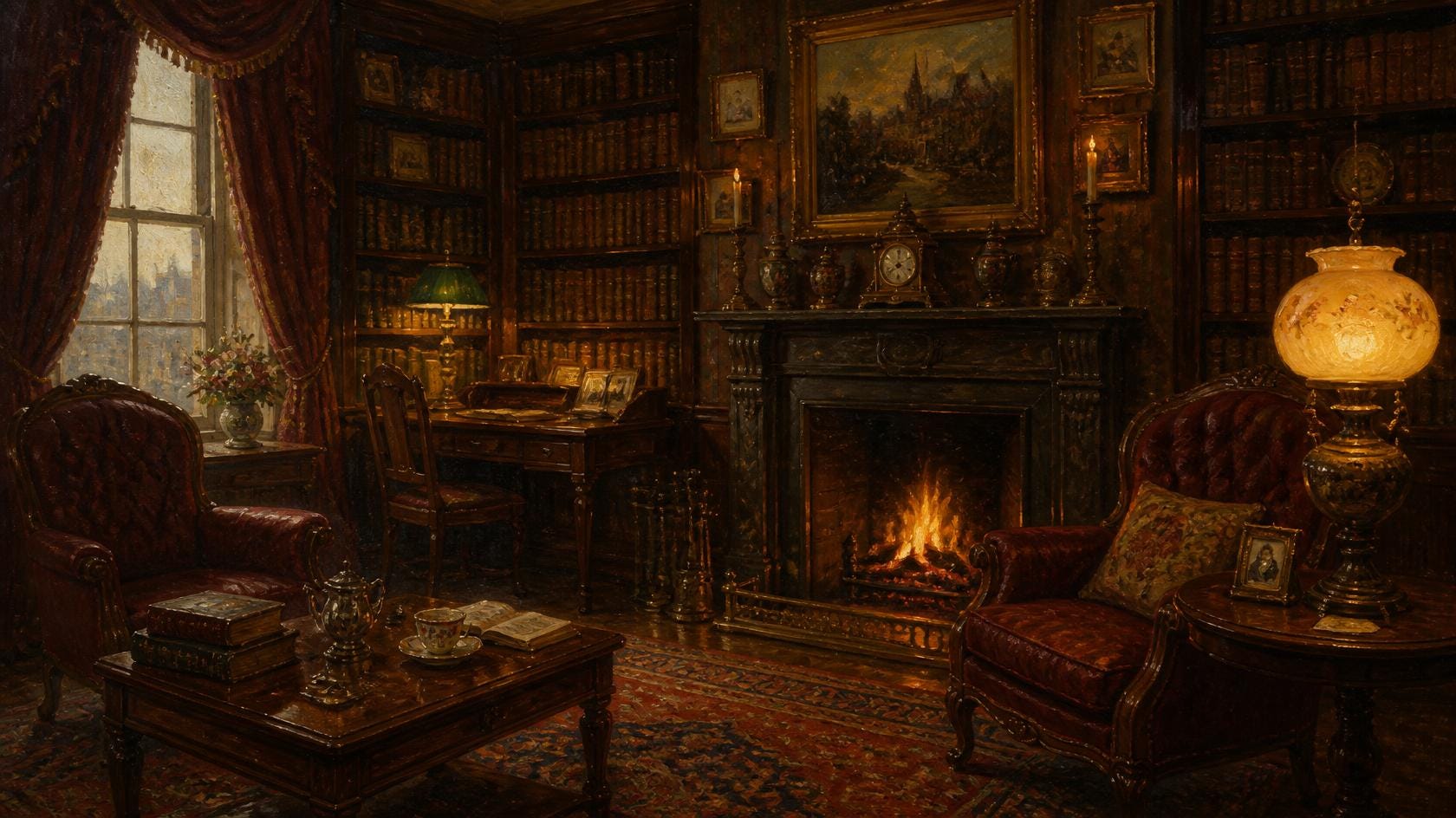
Most fictional addresses disappear when their stories end. Readers may remember the characters, but the buildings fade into the background. Yet more than a century after Arthur Conan Doyle first introduced Sherlock Holmes, 221B Baker Street remains one of the most recognisable addresses in literature. Tourists visit it. Letters are still sent to it. Countless adaptations recreate it. Somehow, a fictional sitting room has become as famous as the detective who lived there.
The enduring appeal of 221B Baker Street begins with a simple literary truth: Doyle made it feel lived in.
Many writers create settings that function merely as stages for action. Baker Street is different. Through Watson’s eyes, readers encounter an actual home. We learn about the chemical experiments spread across tables, the Persian slipper used to store tobacco, the unanswered correspondence pinned to the mantelpiece, and the violin resting nearby. These details have little to do with solving mysteries, yet they are crucial to making the address memorable. Holmes and Watson do not simply work there; they live there.
The flat also serves as a rare point of stability in an otherwise unpredictable world. The Holmes stories take readers into dark alleys, lonely country houses, and dangerous corners of London. Criminals emerge from the shadows and mysteries appear without warning. Yet the stories almost always begin or end in Baker Street. It functions as a literary harbour, a place of safety from which adventures begin and to which order eventually returns.
This sense of permanence helps explain why readers become attached to it. The address represents more than a location; it represents certainty. Holmes may disappear, Watson may marry and move away, London may change, but Baker Street remains. Every time the familiar sitting room reappears, readers feel they have come home.
There is also something appealing about its scale. Unlike castles, mansions, or secret headquarters, 221B is surprisingly ordinary. It is a rented London flat shared by two friends. The setting feels attainable. Readers can imagine climbing the seventeen steps to the sitting room and settling into an armchair by the fire. The genius of Holmes exists within recognisable domestic surroundings. His extraordinary mind is anchored by a very ordinary address.
Perhaps this is why Baker Street survives adaptation so easily. Whether portrayed in Victorian London or reimagined for modern audiences, the essential elements remain unchanged. There is always a sitting room, a fireplace, a desk covered with papers, and the sense that remarkable things might happen at any moment. The details vary, but the atmosphere endures. Baker Street has become less a physical place than a state of mind.
The address also benefits from a curious historical accident. When Doyle began writing the stories, 221B Baker Street did not actually exist. The number was fictional. Yet over time reality adjusted itself to fiction. Today visitors can stand in Baker Street and experience a location inspired by an address that once existed only on a page. Few literary settings have crossed so completely from imagination into the real world.
More importantly, Baker Street embodies the central promise of the Holmes stories themselves. Within its walls, confusion becomes clarity. Clients arrive carrying mysteries that seem impossible to solve. Holmes listens, reflects, and begins the process of untangling the truth. The sitting room becomes a place where reason triumphs over uncertainty. Readers return not merely because they enjoy the adventures, but because they enjoy the reassurance.
In the end, 221B Baker Street endures because it offers something increasingly rare: a sense of belonging. It is familiar without being ordinary, comfortable without being dull, and extraordinary without feeling unattainable. Long after individual plots are forgotten, readers remember the firelit room, the cluttered desk, and the detective waiting patiently for the next knock at the door.
That is why the address remains so powerful. Baker Street is not simply where Sherlock Holmes lived. It is where readers still feel welcome.
Andrew Peel
Andrew Peel is the author of Footsteps on the Moor a thoughtful reimagining of Sherlock Holmes time on Dartmoor via a private journal discovered by his brother Mycroft.